
Layered Education

Data and Measurement

Know whether your programs are actually working.

You already collect more data than anyone has time to use. We build the tools that turn it into a clear answer, for programs we designed and for programs we didn't.

Glynis Shulters working at a laptop

Ever launch something new and wonder whether it worked?

It's one of the hardest questions in school improvement, and it's almost never a data problem. The numbers usually exist. They're spread across three systems, nobody has had a free week to pull them together, and the parts that would matter most, what students and teachers actually experienced, were never collected in the first place because there was no way to gather them.

Districts often bring us programs we had nothing to do with designing, because they need someone to build the means of telling whether any of it changed anything.

What we build

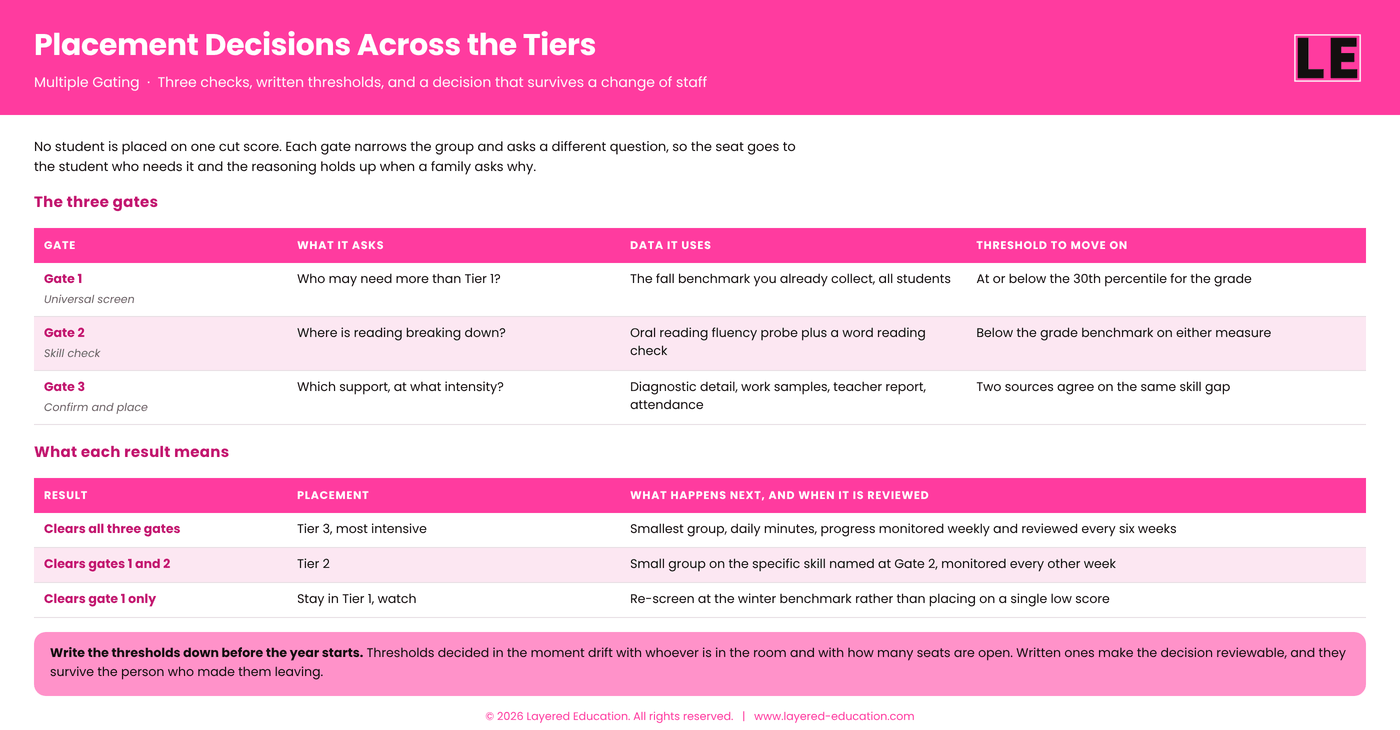
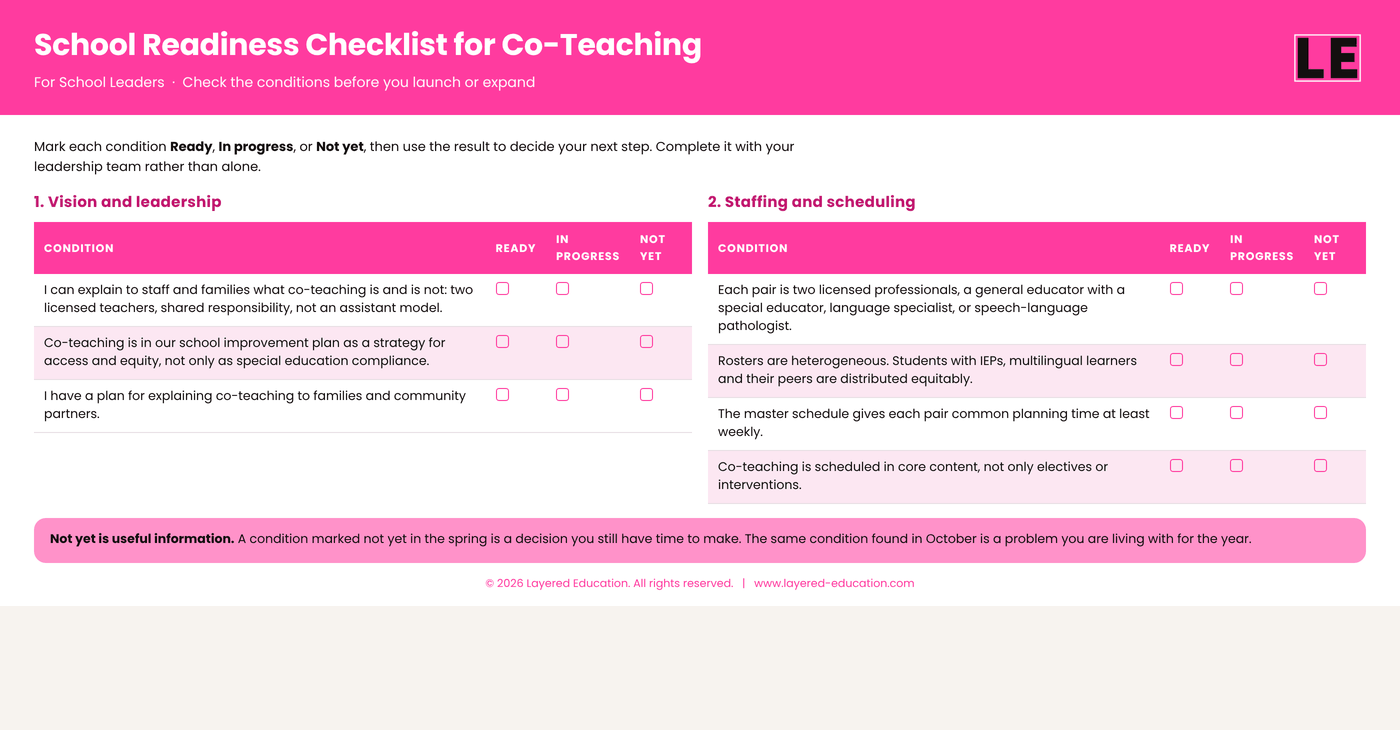
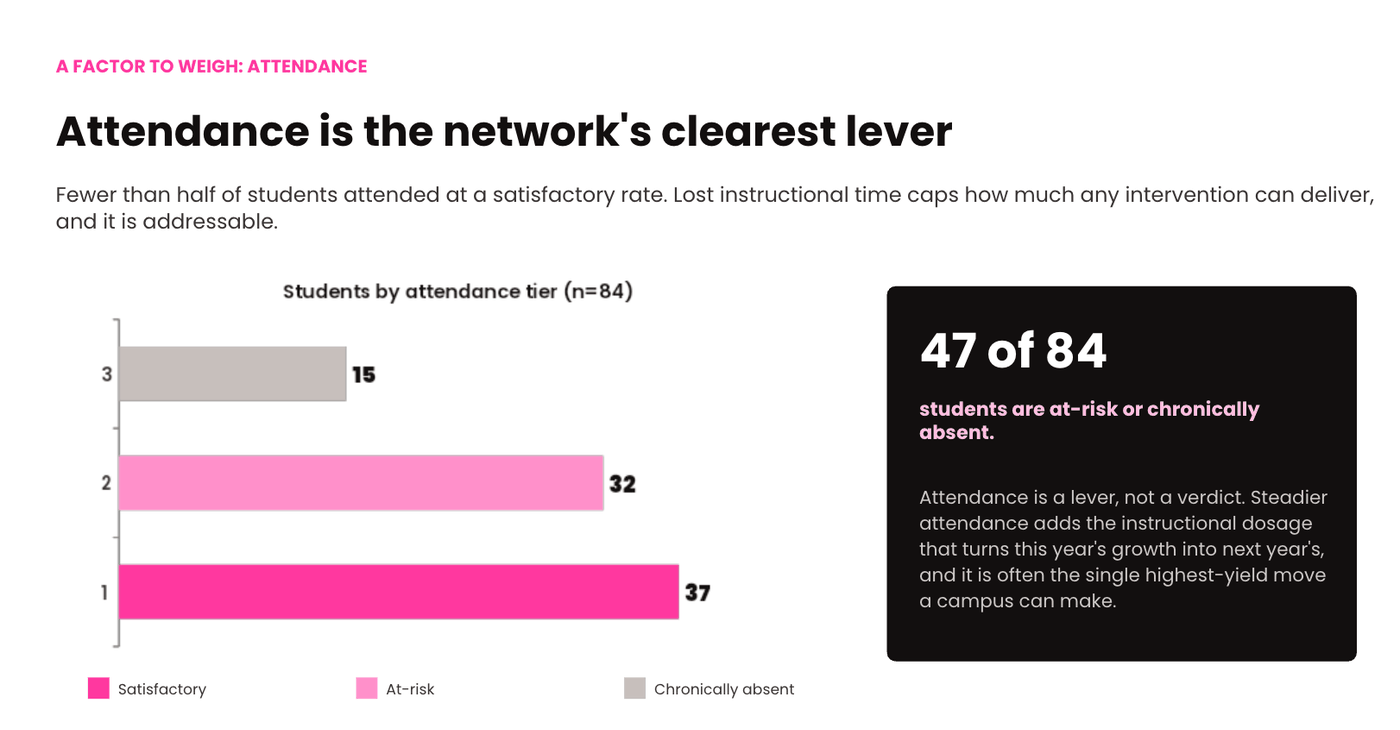
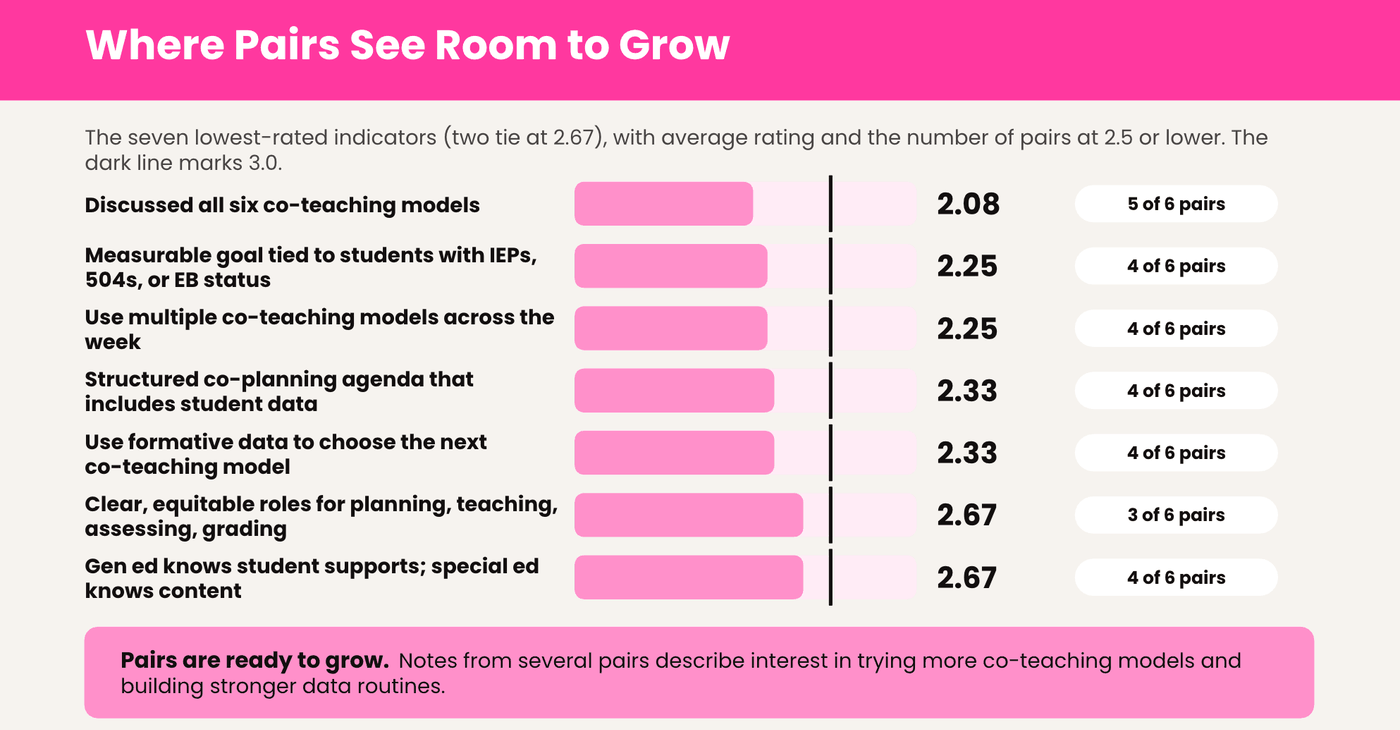
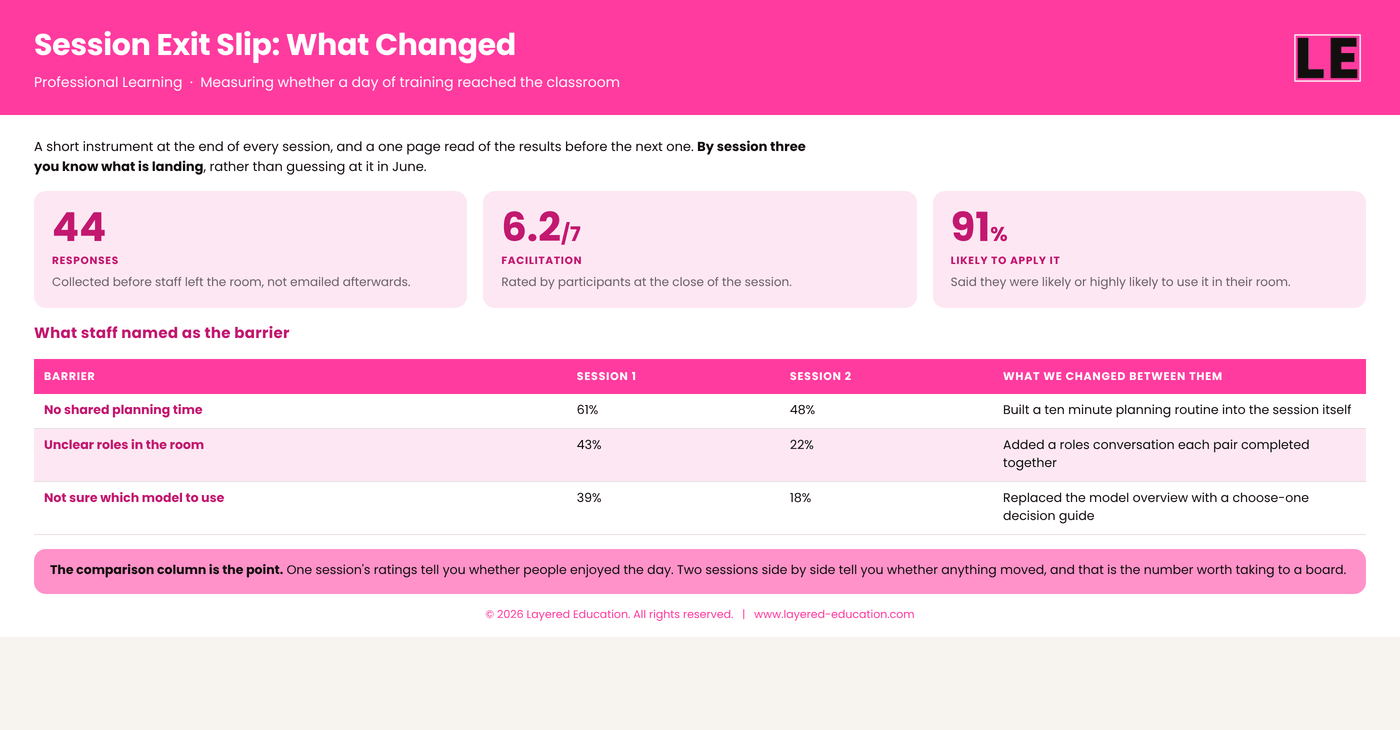
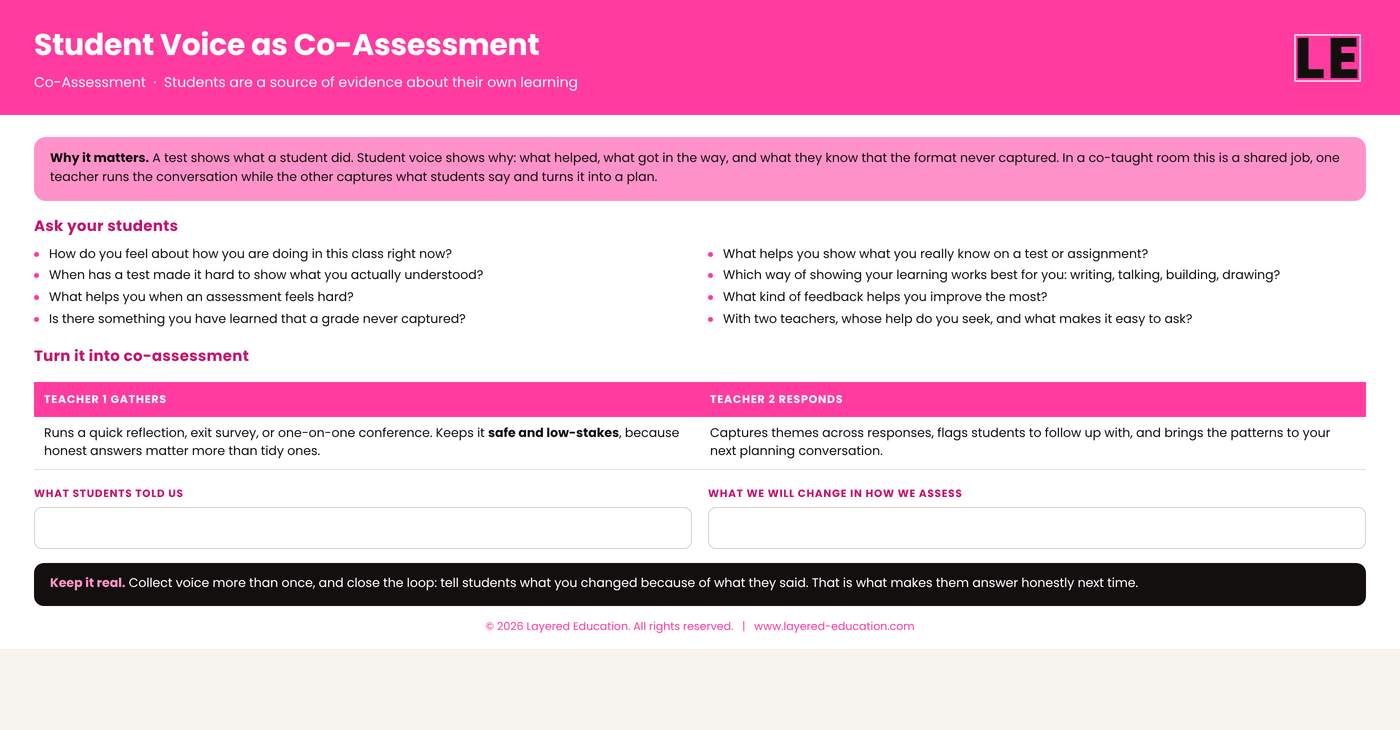
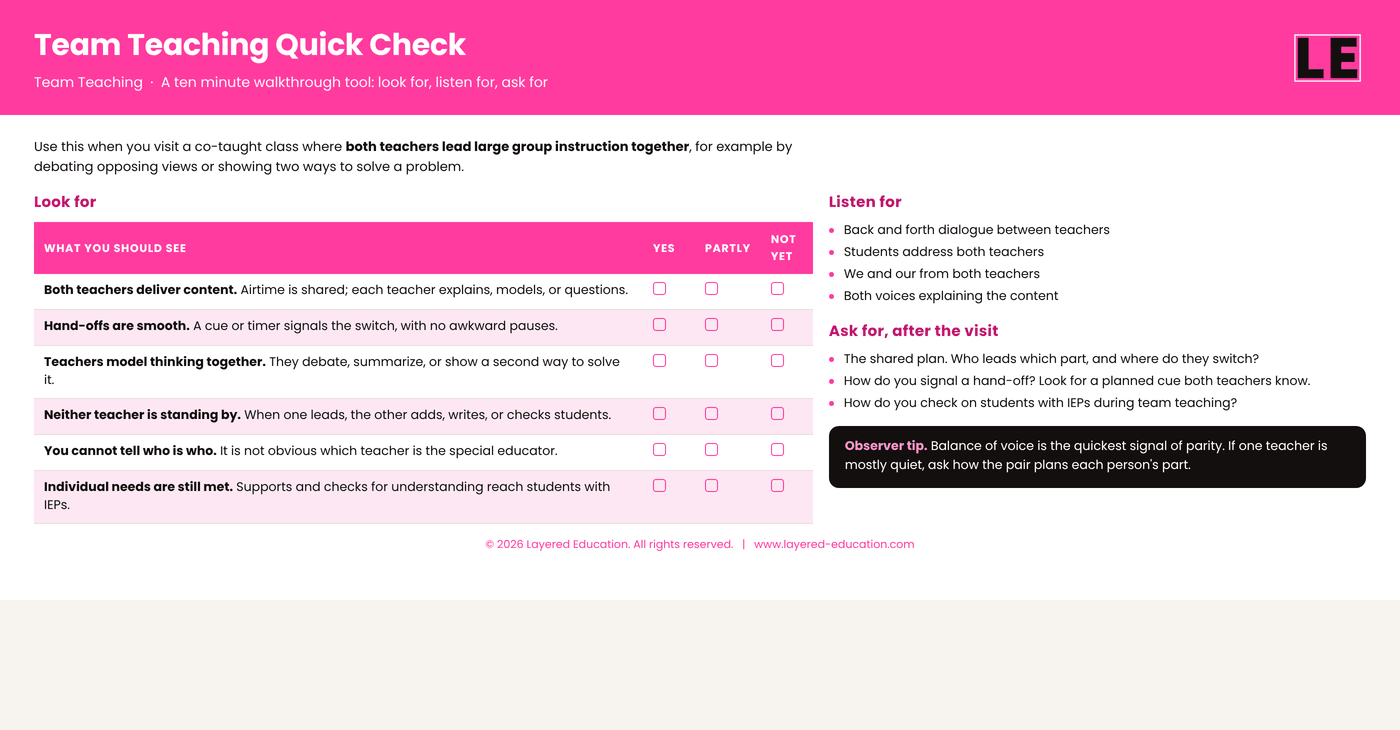
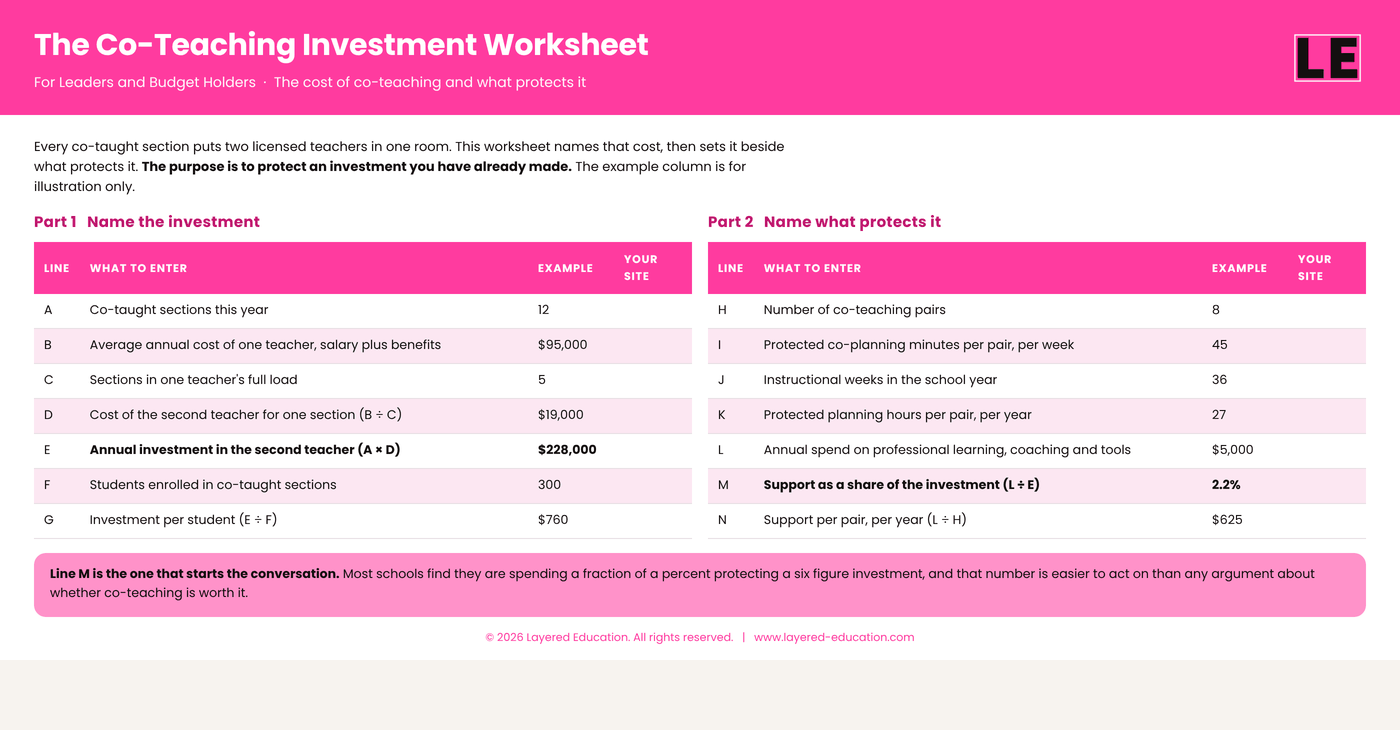
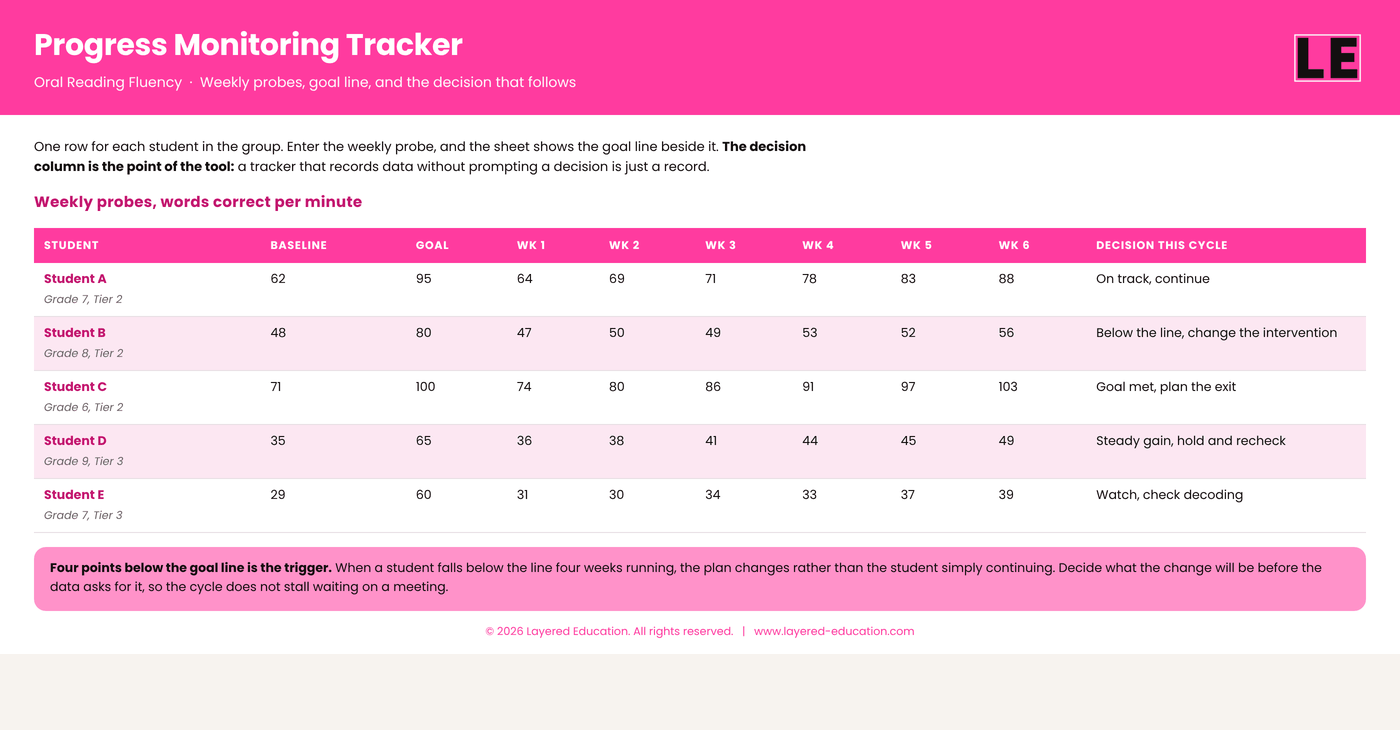
Examples of what we have built for schools. Each one gets rebuilt for the district using it, because a tracker that fits one school's schedule and data rarely fits the next.

Glynis Shulters reviewing data at her desk

Already running something you cannot measure? That is the usual starting point.

Book a free call

How it runs

Four steps, sized to a school year.

First

Start with what you already have

We look at the data you're already collecting, what it can answer, and what it can't. This step on its own often turns up a measure you already own and weren't using.

Then

Agree what working means

We settle on a small number of measures and what would count as success, before the year starts if there's time to do it then.

Then

Build the tools

Trackers, protocols, and instruments sized to a real school year, designed with whoever has to maintain them sitting in the room.

And after

Tell the story

A deck that says what moved, what didn't, and what you would do differently, written so the cautions survive the retelling.

Bring us the program you're already running

You don't need a new initiative to start. If something is already in place and you can't tell whether it's working, that's the right place to begin.

Questions we get asked

We already collect data. Why would we need help?

The numbers usually exist. They are spread across three systems, nobody has had a free week to pull them together, and the parts that would matter most, what students and teachers actually experienced, were never collected in the first place because there was no way to gather them.

Can you measure a program you did not design?

Yes. Districts often bring us programs we had nothing to do with designing, because they need someone to build the means of telling whether any of it changed anything.

What do you actually build?

Progress monitoring trackers, placement decision sheets, readiness checklists, data story decks, practice self-assessments, session exit slips, student voice protocols, walkthrough and observation tools, and cost worksheets. Each one gets rebuilt for the district using it, because a tracker that fits one school's schedule rarely fits the next.

Do you talk to students directly?

Yes. Student voice protocols put what students say next to the test scores, and we come out and run the empathy interviews ourselves when a district would rather not pull staff for it.